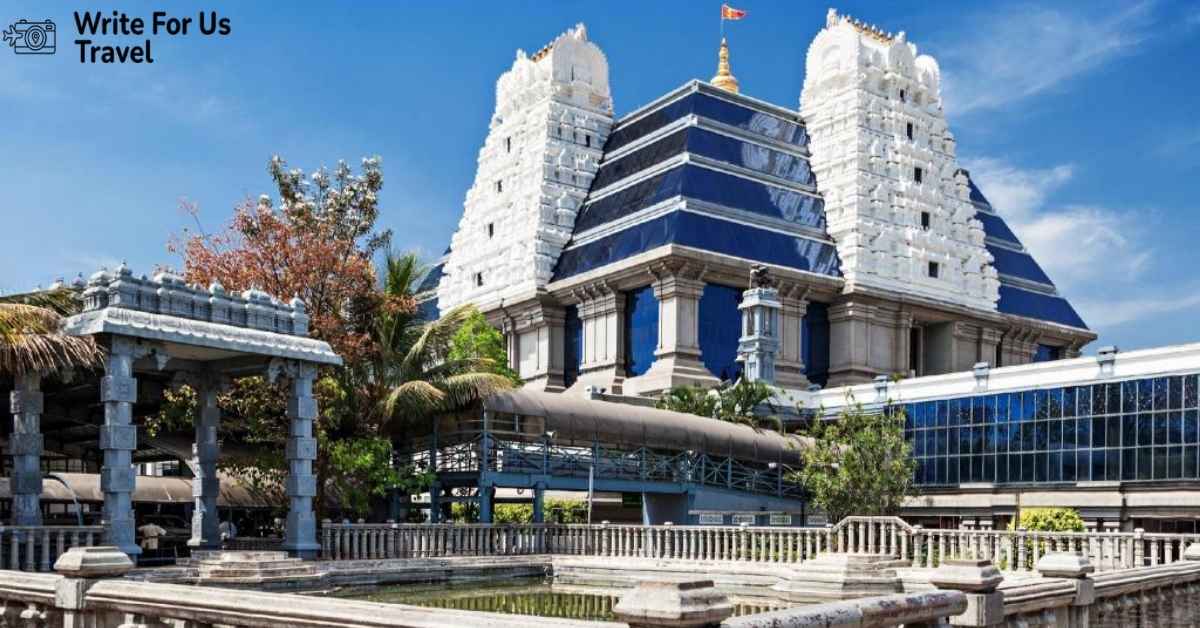
Have you ever walked into a place and felt like the noise of the world just switched off? That’s what happens the moment you step onto the grounds of the ISKCON Temple in Bangalore. Whether you’re a devoted Krishna bhakta, a curious traveler, or someone simply looking for a moment of stillness in a buzzing city, this temple has a way of pulling you in and not letting go easily.
Located on Hare Krishna Hill in Rajajinagar, this isn’t just one of Bangalore’s most visited religious sites. It’s a living, breathing spiritual ecosystem, open every single day, offering far more than a quick darshan and a dash home.
A Grand Beginning
The story of this temple starts with one man’s extraordinary vision. Srila Prabhupada, the founder of the International Society for Krishna Consciousness, laid the philosophical and spiritual groundwork that inspired ISKCON centers across the globe. In Bangalore, that vision took root under the dedicated leadership of Madhu Pandit Dasa, who transformed what was once a modest initiative into one of the most celebrated Krishna temples in the world.
The temple was inaugurated in 1997 by the then President of India, Shankar Dayal Sharma, a moment that underscored just how significant this project was, not only spiritually but culturally. What makes this origin story compelling is that it wasn’t built overnight. It grew steadily, with devotion fueling every brick laid and every ritual established. The founding team didn’t just want a place of worship. They wanted a spiritual landmark that would serve generations. And that’s exactly what they built.
Architectural Excellence
You don’t need to be a devotee to appreciate the sheer visual grandeur of this temple complex. Drawing inspiration from the ancient Tirupati temple style and blending it with South Indian Dravidian architecture, the structure is genuinely breathtaking. Towering gopurams, intricate carvings, gleaming marble floors, and a meticulously landscaped campus create an atmosphere that feels both majestic and meditative.
Inside, you’ll find the main deity hall housing three sacred ensembles. Sri Radha Krishna-Chandra occupy the central altar, flanked by Krishna Balarama on one side and Nitai Gauranga on the other. Two additional shrines are dedicated to Prahlada Narasimha and Srinivasa Govinda. Each altar is dressed with extraordinary care, fresh flowers, ornate garments, and a sense of devotion you can almost physically feel.
The ISKCON Temple Bangalore complex also features a multimedia theatre, a Vedic library, a bookstore stocked with copies of the Bhagavad Gita and Srimad Bhagavatam, and a well-maintained garden space. It isn’t a temple you simply visit. It’s a place you linger in.
Read More: BAPS Shri Swaminarayan Mandir Pune – History, Timings, Architecture & Visitor Guide
Spiritual Routine and Daily Sevas
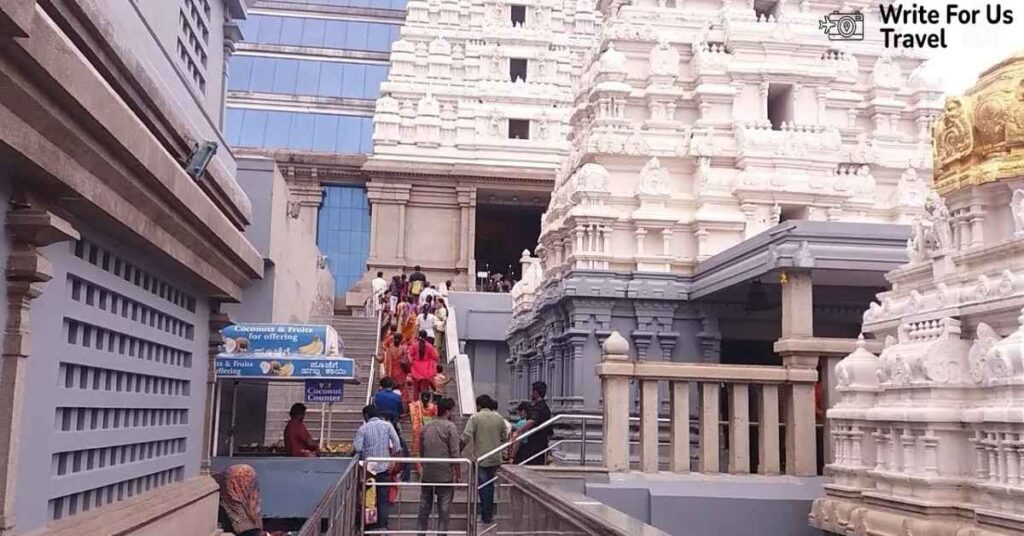
This is where things get really interesting, especially if you’ve never experienced a day at an ISKCON temple before. The daily schedule here runs like clockwork, structured around a series of sevas that begin before most of the city has even considered waking up.
Mangala Arati kicks off at 4:30 AM. Yes, that early. It’s the first offering of the day, a devotional ceremony performed in the pre-dawn hours when the mind is said to be at its clearest and most receptive. If you’ve ever attended one, you already know there’s something almost otherworldly about it. Kirtan echoing through marble halls while most of the city sleeps is an experience that sticks with you.
Tulasi Puja follows shortly after, a ritual honoring the sacred Tulasi plant, considered deeply auspicious in Vaishnava tradition. Through the day, multiple darshan sessions, arati ceremonies, and offering rituals keep the spiritual energy continuously flowing.
The temple also runs regular Bhagavad Gita classes, Japa meditation sessions, and devotional programs that are open to everyone. Hare Krishna kirtan sessions happen throughout the day, often drawing spontaneous participation from visitors who didn’t plan to sing but couldn’t help themselves.
Here’s a quick look at the general daily schedule:
- 4:30 AM: Mangala Arati
- 7:15 AM: Darshan Arati
- 8:00 AM: Bhagavatam class
- 12:30 PM: Raj Bhoga Arati
- 5:00 PM: Gaura Arati
- 8:15 PM: Shayana Arati (closing for the night)
Temple visiting hours for the general public are typically from 7:15 AM to 1:00 PM and again from 4:00 PM to 8:30 PM. It’s always a good idea to confirm current timings before your visit, as they may shift slightly during festivals.
Festivals That Light Up the Calendar
If you thought the regular days were special, festival season here is something else entirely. The ISKCON community celebrates Hindu temple festivals with a scale and vibrancy that draws tens of thousands of visitors to Bangalore.
Krishna Janmashtami celebration in Bangalore at this temple is legendary. The temple stays open through midnight, devotees throng the complex in massive numbers, and the entire atmosphere crackles with joy and devotion. Rama Navami temple celebration, Radhashtami festival, Gaura Purnima, and Narasimha Jayanti are all observed with equal enthusiasm and elaborate ritual.
Ratha Yatra in Bangalore, modeled after the iconic chariot procession of Puri, is another event that brings the entire city to its feet. Massive, beautifully decorated chariots carrying the deities are pulled through the streets with thousands of devotees singing and dancing alongside. It’s not just a religious event. It’s a cultural spectacle.
If you’re planning a visit and want to witness the temple at its most alive, check the festival calendar in advance. Arriving during one of these celebrations will give you a perspective on devotional life that no book can quite replicate.
ISKCON’s Social Mission: Feeding Millions
Here’s something that often surprises first-time visitors. The Akshaya Patra Foundation, one of the world’s largest school meal programs, was born right here. Founded under the ISKCON Bangalore umbrella, Akshaya Patra now feeds over two million children across India every single school day. That number deserves a moment to sink in.
The philosophy is straightforward: no child should sit in a classroom hungry. What began as a modest midday meal initiative in Bangalore has grown into a nationally recognized humanitarian program supported by the Government of India. The temple’s kitchen operates with remarkable efficiency, producing nutritious meals at scale while maintaining the sanctity of sattvic, vegetarian food.
When you visit, you can also enjoy ISKCON Bangalore prasadam at the temple’s dining facility. The food is simple, wholesome, and prepared with devotional intent. Many visitors say it’s some of the best food they’ve eaten in the city, not because of elaborate spices, but because of the care that goes into every preparation.
This social mission is what elevates ISKCON Bangalore beyond a place of worship. It’s an institution that actively works to reduce hunger, promote education, and embody the principle that spirituality and service go hand in hand.
A New Chapter: ISKCON Vaikuntha Hill
The Hare Krishna movement in Bengaluru isn’t standing still. A major expansion project is currently underway at the Vaikuntha Hill temple on Kanakapura Road, set to become one of the most awe-inspiring spiritual destinations in the entire country.
This new project draws inspiration from the sacred hilltop temples of Tirupati and aims to create an immersive pilgrimage experience on an unprecedented scale. The Vaikuntha Hill temple promises expansive deity halls, lush gardens, meditation spaces, and infrastructure designed to welcome millions of visitors annually. Think of it as a spiritual city in the making.
For devotees and spiritual seekers across Karnataka and beyond, this represents a generational milestone. The vision is to make Bengaluru a global center for Krishna consciousness, building on the legacy that Srila Prabhupada set in motion decades ago and that Madhu Pandit Dasa has continued to nurture with remarkable commitment.
Tips for Visitors
A little preparation goes a long way when visiting a temple of this scale. Here’s what you should know before you arrive.
Dress modestly. This isn’t a strict dress code enforced at the gate, but it’s a mark of respect. Avoid sleeveless tops and short skirts. Comfortable Indian attire works perfectly, though western casuals are fine too as long as they’re not revealing.
Remove your footwear before entering. Shoe storage facilities are available at the entrance. Carry a small bag to keep your belongings together, as the complex is large and getting separated from your group is easier than you’d expect.
Photography is permitted in most outdoor areas but may be restricted near the main altars. Check with temple staff to be sure. The temple is most crowded on weekends and during festivals. If you prefer a quieter experience, a weekday morning visit is ideal.
The ISKCON Bangalore prasadam hall serves meals at designated hours. Carrying a small donation for the Akshaya Patra Foundation is a meaningful gesture if you feel moved to contribute. Parking is available on site, but it fills up quickly during peak hours, so arrive early if you’re driving.
Most importantly, come with an open mind. Whether you’re a believer, a skeptic, or somewhere in between, the temple has a way of offering exactly what you need in that moment.
FAQ’s
What are the ISKCON Temple Bangalore timings for general visitors?
The temple is open from 7:15 AM to 1:00 PM and from 4:00 PM to 8:30 PM daily, though timings may vary slightly during major festivals.
Where exactly is the ISKCON Temple located in Bangalore?
It is situated on Hare Krishna Hill in Rajajinagar, West Bangalore, easily accessible by road and metro.
Is there an entry fee to visit the ISKCON Temple Bangalore?
General darshan is free of charge. Certain special sevas and programs may involve a nominal fee or voluntary contribution.
Can non-Hindus visit the temple?
Absolutely. The temple welcomes visitors of all faiths, backgrounds, and nationalities. Spiritual curiosity is the only prerequisite.
What is the best time to visit to avoid heavy crowds?
Weekday mornings, particularly between 9:00 AM and 11:00 AM, tend to be quieter. Avoid weekends and major festival days if you prefer a more peaceful visit.

Oliver Bennett is Researcher focused on responsible, experience-led exploration. Having independently planned and completed 40+ trips across Europe and Asia, he provides practical itineraries, transport guidance, and safety insights grounded in firsthand knowledge. His work is supported by verified sources, local expert interviews, and regularly updated travel regulations.