There’s something about Tiruvannamalai that stops you in your tracks. Maybe it’s the massive gopuram you can spot from miles away. Maybe it’s the energy in the air, thick with incense, devotion, and something older than words. Or maybe it’s just the mountain. Arunachala. A hill that millions believe is not just a hill at all, but Shiva himself, standing still in stone form since the beginning of time.
Whatever draws people here, they keep coming. In millions. Every single year.
Introduction to Arunachalesvara Temple, Tiruvannamalai
Nestled at the foot of the sacred Arunachala Hill in Tiruvannamalai, Tamil Nadu, the Arunachalesvara Temple is one of the most revered Shaivite shrines in all of India. It isn’t just a temple. It’s a living, breathing spiritual ecosystem, one that has absorbed the prayers, tears, and enlightenment of countless souls across the centuries.
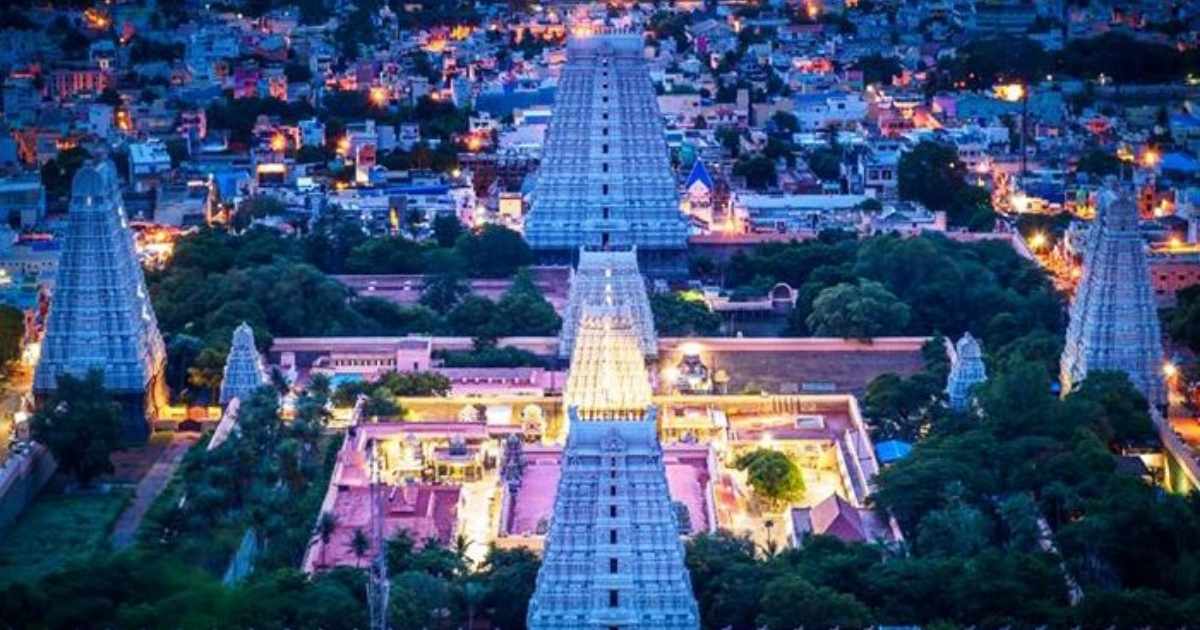
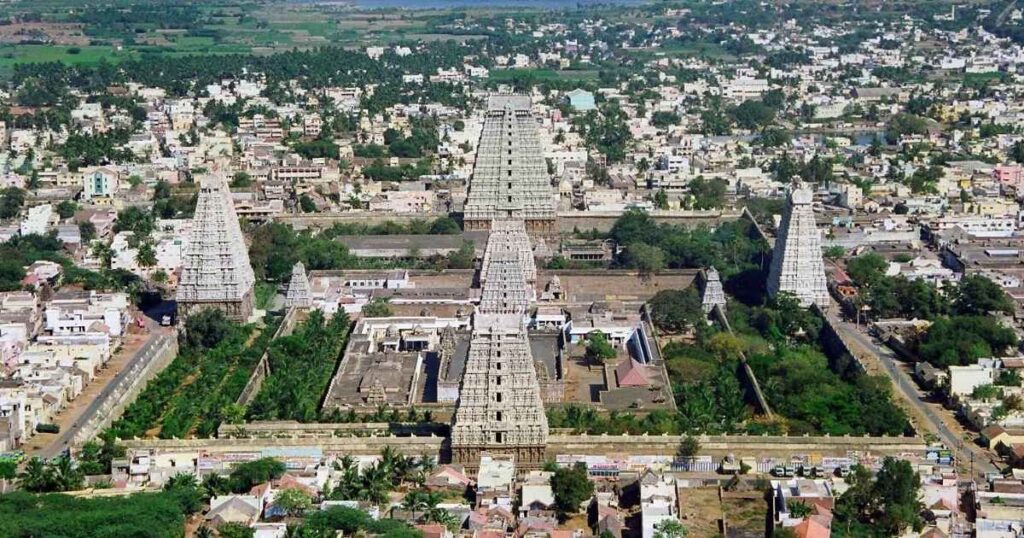
This magnificent complex spans over 10 hectares, making it one of the largest temple complexes in India. Its towering rajagopuram rises to a staggering 66 meters, commanding the skyline with authority and grace. You don’t just see it. You feel it.
The temple is dedicated to Lord Shiva in his unique manifestation as the fire element, Agni, and the presiding deity is known as Annamalaiyar. The goddess here is Unnamalai Amman. Together, they draw pilgrims, seekers, monks, and curious travelers from across the globe.
What makes this particular temple stand apart from the thousands of Shiva temples scattered across South India? It’s its position as one of the Pancha Bhoota Sthalams, the five sacred temples, each representing one of the five classical elements of nature. Arunachalesvara represents fire. And everything about this place reflects that, the radiance, the intensity, the transformative heat of spiritual awakening.
The Annamalaiyar Temple Tamil Nadu has been celebrated in ancient Tamil Saiva texts, sung in Tevaram hymns by the revered Nayanmars, and visited by philosophers, sages, and ordinary devotees who simply want to feel closer to something divine. There’s no entry fee. No ticket queue. Just open arms and open doors, regardless of who you are or where you come from.
Also Read: Palani Murugan Temple: Exploring the Divine Glory of Arulmigu Dhandayuthapani Swamy Temple
Spiritual Significance of the Agni (Fire) Element
Of the five Pancha Bhoota Sthalams, Tiruvannamalai holds the most dramatic cosmic symbolism. Fire, in Sanskrit, Agni, is not merely a physical element here. It represents the ultimate purifier. The force that burns away illusion and leaves behind only truth.
The Shiva lingam worshipped in the inner sanctum here is called the Agni Lingam, and it is considered a living embodiment of fire energy rather than a static stone idol. Devotees don’t just visit it. They approach it with reverence, as though entering the presence of the cosmos itself.
The concept of destruction of ego symbolism runs deep in this tradition. Fire consumes. That’s the point. In the philosophy underlying this temple, what burns away is not your life or your joy, but your ego, your false sense of separation from the divine. Moksha and liberation belief is central to the Arunachala experience. Pilgrims often speak of feeling lighter here. Freer. Like something invisible but heavy has quietly slipped away.
Sri Ramana Maharshi, one of the most celebrated sages of the 20th century, arrived at Arunachala as a teenager and never left. He spent decades meditating in the caves of the hill, teaching a path of self-inquiry that attracted followers from across the world. His presence turned Tiruvannamalai into a globally recognized yogic meditation destination. His ashram still stands at the base of the hill, and it remains one of the most visited spiritual sites in Tamil Nadu.
The eternal flame of enlightenment isn’t just a metaphor here. It’s a felt reality for those who spend time in this place with an open mind.
The Legend of Shiva’s Column of Fire
Every great temple has a founding story. But the legend of Arunachalesvara is in a different league altogether.
It begins with a cosmic dispute. Brahma, the creator, and Vishnu, the preserver, argued over who was the supreme being. Pride flared between two of the most powerful forces in the universe. At that moment, Shiva appeared as a blazing column of fire, infinite, boundless, with no visible beginning and no visible end. He challenged them both: whoever could find the top or the bottom of this column would be declared the greatest.
Vishnu took the form of a boar and dove deep into the earth, searching for the base. Brahma became a swan and soared upward, seeking the summit. Neither could find it. The column of fire legend teaches a humbling truth, that the divine cannot be measured, contained, or claimed by ego.
Brahma, however, tried to cheat. He spotted a ketaki flower drifting downward and asked it to falsely testify that he had reached the top. Shiva exposed the deception and cursed Brahma, which is why, unlike Vishnu and Shiva, Brahma has virtually no major temples dedicated to him in India.
That column of fire is said to have manifested as Arunachala Hill itself. The hill, in this tradition, is not a geological formation. It is Shiva Vishnu Brahma legend made permanent, the cosmos crystallized into earth and stone, standing quietly in Tamil Nadu while the world rushes past.
This story isn’t just mythology. For devoted pilgrims, it explains why circumambulating this hill carries such immense spiritual weight.
Historical Background and Dynastic Contributions
The Arunachalesvara Temple’s physical form as we see it today is the result of centuries of construction, renovation, and royal patronage. Its roots, however, reach back into an antiquity so deep that even historians find it difficult to pin down a founding date.
Ancient Tamil Saiva texts reference Arunachala with unmistakable familiarity, suggesting the sacred status of this site predates written records. The Tevaram hymn references, composed by the Nayanmars between the 6th and 9th centuries CE, describe Tiruvannamalai with deep devotion, placing it firmly within the earliest recorded landscape of Tamil Shaivism.
The Chola dynasty temple construction contributions are significant. The Cholas, one of the most powerful empires of medieval South India, left their architectural fingerprints throughout Tamil Nadu, and Tiruvannamalai was no exception. They built and expanded key structures within the complex, reinforcing both the religious and political importance of the site.
Later came the Vijayanagara Empire, whose rulers transformed many South Indian temples into the monumental complexes we recognize today. Vijayanagara temple architecture brought the towering gopurams, expansive prakara walls, and elaborate sculptural programs that define the current structure. The thousand pillared hall temple inside the complex, a marvel of craftsmanship, is attributed largely to Vijayanagara patronage.
Dravidian architecture temple traditions reach a peak expression here. Every gateway, every corridor, every carved pillar tells a layered story of devotion passed from one dynasty to the next. The temple is not one era’s achievement. It’s a centuries-long collaboration between kings, craftsmen, and the divine.
Architectural Grandeur and Temple Layout
Walk through the outer gopuram for the first time and you might just stop moving. It’s that impressive.
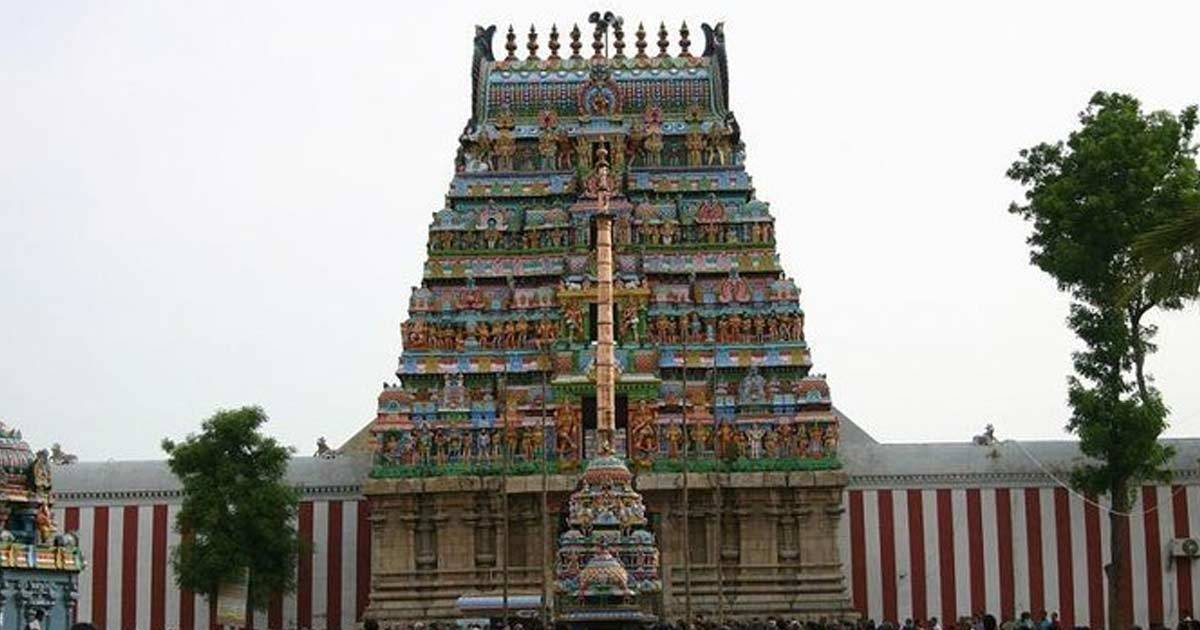
The Arunachalesvara Temple complex contains four towering gopurams, one on each side of the vast enclosure. The eastern rajagopuram, standing at 66 meters, is the tallest and most famous. It has eleven tiers, covered from base to tip in intricate stucco sculptures depicting gods, celestial beings, and mythological scenes. Getting close and looking up feels like reading an ancient comic in stone.
The complex is arranged in three concentric enclosures known as prakaras. Each one draws you deeper inward, moving from the busy outer courtyard to the increasingly sacred inner spaces. The innermost sanctum houses the Agni Lingam, the focal point of all worship here.
One of the most remarkable spaces within the complex is the thousand pillared hall temple, known in Tamil as Ayiram Kaal Mandapam. Each pillar is carved with a level of detail that makes you wonder how it was even physically possible with the tools available at the time. These halls weren’t just ceremonial spaces. They served as gathering points for festivals, discourses, and community rituals.
The Ashta Lingams Tiruvannamalai are eight smaller Shiva shrines positioned around the hill itself at cardinal and ordinal directions. Each Ashta Lingam corresponds to one of the eight directions and holds its own ritual significance. Pilgrims doing the Girivalam often pause at each of these shrines during their walk.
The sthala vriksha, the sacred tree of the temple, is the Magizha tree, believed to possess divine energy. Devotees tie threads to its branches and offer prayers beneath its canopy, continuing a tradition that stretches back generations.
Karthigai Deepam Festival and Its Divine Flame
If there’s one event that captures the soul of Tiruvannamalai more than any other, it’s the Karthigai Deepam festival Tamil Nadu celebrates with extraordinary fervor every year.
Held during the Tamil month of Karthigai, typically in November or December, this festival marks the moment when Shiva manifested as the column of infinite fire. A massive flame is lit atop Arunachala Hill, visible from dozens of kilometers away. It burns for several days, drawing an estimated three million pilgrims in a single cycle. Yes, three million.
The giant flame atop hill isn’t just a spectacle, though it certainly is one. It’s a living symbol of the Agni Lingam, the fire manifestation of Shiva made visible for all to witness. Watching it from the plains below, with thousands of pilgrims gathered in silent awe, is one of those experiences that changes your relationship with scale, time, and meaning.
The festival also involves the lighting of thousands of oil lamps throughout the temple complex and the surrounding town. Homes, streets, and rooftops glow with flickering light. The entire region transforms into something that feels more like a dream than a destination.
For those planning to attend, book accommodation months in advance. The town overflows during Karthigai Deepam, and last-minute arrangements can be chaotic. It’s worth every bit of planning effort, though. Very few experiences in South India, or anywhere, compare to this.
Giri Pradakshina (Girivalam): The Sacred 14 km Circumambulation
Ask any regular pilgrim to Tiruvannamalai what the real essence of the visit is, and most will say: the Girivalam. Not the temple visit itself, as central as that is. The walk around the mountain.
Giri Pradakshina Tiruvannamalai, also widely called Girivalam Arunachala Hill, is the practice of circumambulating the sacred hill on foot, a distance of approximately 14 kilometers along a well-marked path. Most pilgrims complete it barefoot. The barefoot pilgrimage tradition here is ancient, rooted in the belief that direct contact with the earth, and with the hill itself, deepens the spiritual connection of the walk.
Spiritual circumambulation practice, in general, is common across many traditions. But there’s something particular about doing it here. The path takes you past caves, ashrams, Ashta Lingam shrines, small temples, and ancient trees. You’re not just walking. You’re moving through layers of history, legend, and lived devotion.
The full moon spiritual walk draws the largest crowds. On every full moon night, hundreds of thousands of people gather to complete the Girivalam under the moonlight. It’s an extraordinary sight, a river of devotion, flowing silently in the dark. Families with young children walk alongside elderly pilgrims and foreign spiritual seekers. The diversity of the crowd is itself a kind of teaching.
The path is manageable for most people in reasonable health. Start early if you’re going on an ordinary day, the midday heat in Tamil Nadu can be punishing. On full moon nights, the energy of the crowd tends to carry you forward even when your feet protest.
Temple Rituals, Timings, and Special Abhishekams
The Arunachalesvara Temple follows a structured daily rhythm of rituals that has changed very little over centuries. Understanding this rhythm helps you make the most of your visit, whether you’re a pilgrim seeking spiritual depth or simply a curious traveler wanting to witness something authentic.
Tiruvannamalai temple timings generally run from around 5:30 AM to 12:30 PM and again from 3:30 PM to 9:30 PM, though these hours can vary on festival days or special occasions. It’s always a good idea to verify timings locally before you arrive, especially during major festivals.
The inner sanctum lingam worship involves six daily rituals known as kaala pujas, Thiruvanandal, Kalasanthi, Uchikalam, Sayarakshai, Irandamkalam, and Ardha Jamam. Each ritual involves elaborate offerings, Vedic chanting, lighting of lamps, and the ceremonial bathing of the Agni Lingam with water, milk, honey, and sacred substances.
Abhishekam, the ritual anointment, is considered particularly auspicious here. Devotees can participate in special abhishekams by making arrangements at the temple administration office. The experience of witnessing or participating in one is deeply moving, even for those unfamiliar with the tradition.
The Shaivite devotion center that Arunachalesvara represents draws not just individual worshippers but entire family pilgrimages. Many Tamil families have made the visit to Tiruvannamalai a generational tradition, coming first as children and returning as parents and grandparents. That continuity of devotion is itself a form of living heritage.
How to Reach Arunachalesvara Temple & Travel Tips
Getting to Tiruvannamalai is easier than it used to be, and the infrastructure around the temple has improved considerably over the past decade.
By rail, Tiruvannamalai has its own railway station with connections to Chennai, Villupuram, and Vellore. From Chennai, the journey takes approximately 3 to 4 hours depending on the train. Regular express trains make this a comfortable option for most visitors.
By road, Tiruvannamalai is well connected to Chennai (roughly 185 km), Bangalore (around 210 km), and Pondicherry (about 90 km). State buses and private taxis both serve the route. If you’re driving, the roads are generally in good condition, though traffic inside the town itself can get congested during festival periods.
The nearest major airport is Chennai International Airport. From there, you can take a train or hire a cab directly to Tiruvannamalai.
For accommodation, the town offers everything from budget guesthouses to mid-range hotels. Several ashrams, including the Ramana Maharshi Ashram, offer lodging for spiritual seekers at minimal cost, though advance booking is essential. During Karthigai Deepam and full moon Girivalam nights, accommodation fills up weeks in advance without exception.
A few practical notes worth keeping in mind: dress modestly when entering the temple, traditional attire is respected and often expected. Remove footwear at the entrance. Photography restrictions apply in certain sections of the inner temple. And if you’re planning the Girivalam, carry water, wear comfortable footwear if you’re not going barefoot, and start the walk early in the morning or in the evening to avoid the heat.
Nearby Spiritual Attractions and Modern Global Appeal
Tiruvannamalai isn’t just a single-destination visit. The area around it carries its own quiet power.
The Sri Ramana Maharshi Ashram, Ramanasramam, sits at the base of Arunachala Hill and welcomes visitors of all backgrounds and faiths. The samadhi (burial shrine) of Ramana Maharshi himself is located here, and the meditation hall carries an atmosphere of unusual stillness. Many visitors describe spending time here as one of the most peaceful experiences of their lives.
Scattered across the hill are caves where Ramana Maharshi and other sages once meditated. Virupaksha Cave and Skandashram are both accessible on foot and open to visitors. Sitting quietly inside one of these caves, with the hill above you and the plains below, offers a perspective that’s genuinely hard to put into words.
Beyond the hill, the Tiruvannamalai district holds several other ancient temples and sacred sites for those who want to explore more broadly. The region is also increasingly attracting international visitors, particularly from Europe, the Americas, and Southeast Asia, who come not just as tourists but as long-term spiritual seekers.
The global spiritual pilgrimage site status that Arunachalesvara and its surrounding sacred landscape have earned is not the result of marketing. It grew organically, word of mouth passed between seekers who found something here they couldn’t quite name but couldn’t forget either.
As a South Indian temple complex, it stands as both a masterpiece of cultural heritage and a living spiritual center. The two aren’t in conflict here. The ancient and the immediate coexist with remarkable ease.
FAQ’s
What is Arunachalesvara Temple famous for?
It’s one of the Pancha Bhoota Sthalams representing the fire element, and it’s renowned for the Karthigai Deepam festival and Girivalam circumambulation.
What is the best time to visit Tiruvannamalai?
The cooler months between October and March are most comfortable, though visiting during Karthigai Deepam or a full moon Girivalam offers an exceptional experience.
How long does the Girivalam walk take?
The 14 km path around Arunachala Hill typically takes 3 to 5 hours depending on your pace and how many shrines you stop at.
Is there an entry fee for the temple?
Entry to the main temple is free for all visitors, though fees apply for certain special rituals and abhishekams.
What is the significance of Ramana Maharshi in Tiruvannamalai?
Sri Ramana Maharshi lived and taught at Arunachala for over five decades, making it a globally recognized center for self-inquiry and Advaita Vedanta philosophy.

Oliver Bennett is Researcher focused on responsible, experience-led exploration. Having independently planned and completed 40+ trips across Europe and Asia, he provides practical itineraries, transport guidance, and safety insights grounded in firsthand knowledge. His work is supported by verified sources, local expert interviews, and regularly updated travel regulations.