If you’ve ever stood at the entrance of a temple and felt something shift inside you, you’ll understand what Kanchipuram does to people. This ancient city in Tamil Nadu isn’t just a dot on the map. It’s a living, breathing spiritual universe. And at the heart of it all sits the Kanchi Kamakshi Temple, one of the most revered Shakti Peethas in all of India. Whether you’re a devoted pilgrim or a curious traveler, knowing the Kanchi Kamakshi Temple timings and key details before you visit makes all the difference.
Kanchi Kamakshi Historical Significance
Few temples carry the kind of spiritual weight that this one does. The Kamakshi temple Kanchipuram history stretches back thousands of years, with roots deeply embedded in the Puranic age. Goddess Kamakshi, believed to be a form of Parvati, is said to have performed intense penance here to win the love of Shiva. That single act of devotion gave this sacred ground its identity.
Adi Shankaracharya, the eighth-century philosopher-saint, played a transformative role in shaping the temple’s spiritual direction. He installed the Sri Chakra within the sanctum and shifted the goddess’s form from an intense, fierce manifestation to a more serene and benevolent one. This transition from ugra to shanta swarupa, as scholars describe it, reflects the essence of Sri Vidya Upasana, a path of worship centered on the divine feminine energy. Shankaracharya also established the Kanchi Kamakoti Peetham here, which continues to be one of the most authoritative spiritual institutions in Hindu tradition.
Read More: ISKCON Temple Bangalore – Timings & Worship
Kanchi Kamakshi Timings Table
Planning your visit? Here’s what you need to know about Kanchi Kamakshi Temple timings so you don’t miss a single pooja or darshan slot.
| Session | Opening Time | Closing Time |
| Morning Darshan | 5:30 AM | 12:30 PM |
| Evening Darshan | 4:00 PM | 9:00 PM |
| Abhishekam (Morning) | 6:00 AM | 8:00 AM |
| Alankaram Darshan | 8:00 AM | 12:00 PM |
| Evening Pooja | 6:00 PM | 8:00 PM |
The Kamakshi temple pooja schedule follows a traditional Agamic structure. Five major poojas take place daily. Thiruvanandal at dawn, Kalaasanthi in mid-morning, Uchikalam at noon, Sayarakshai in the evening, and Ardha Jamam late at night during festival seasons. It’s worth arriving early to catch the morning abhishekam. The energy during that hour is unlike anything else.
The Deity and Symbolism
Goddess Kamakshi isn’t your typical temple deity. She sits in a rare posture called padmasana, cross-legged and composed, which is uncommon in Shakti temples across South India. In her four arms, she holds a sugarcane bow, floral arrows, a noose, and a goad. These aren’t just symbols. They represent the divine tools through which she governs desire, consciousness, attachment, and liberation.
She’s closely identified with Lalita Tripura Sundari, the supreme goddess in the Sri Vidya tradition. The Sri Chakra installed by Adi Shankaracharya in the sanctum is considered her geometric form, a yantra of extraordinary cosmic significance. Devotees believe that worshipping here isn’t just a ritual. It’s a direct conversation with universal consciousness.
Kanchi Kamakshi Temple Architecture
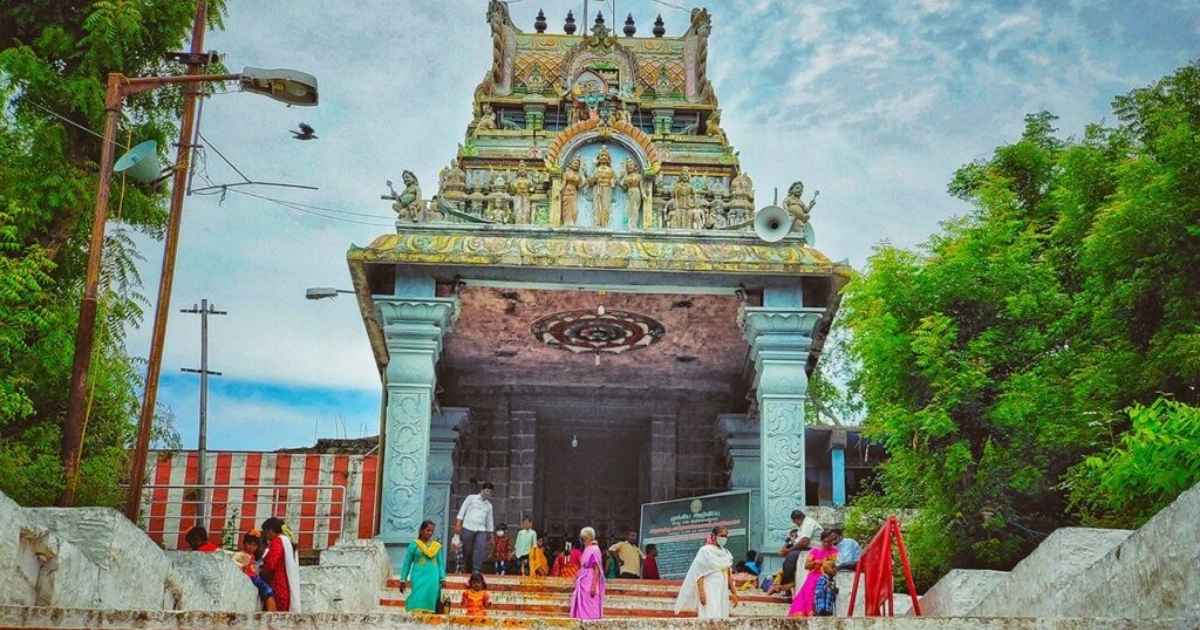
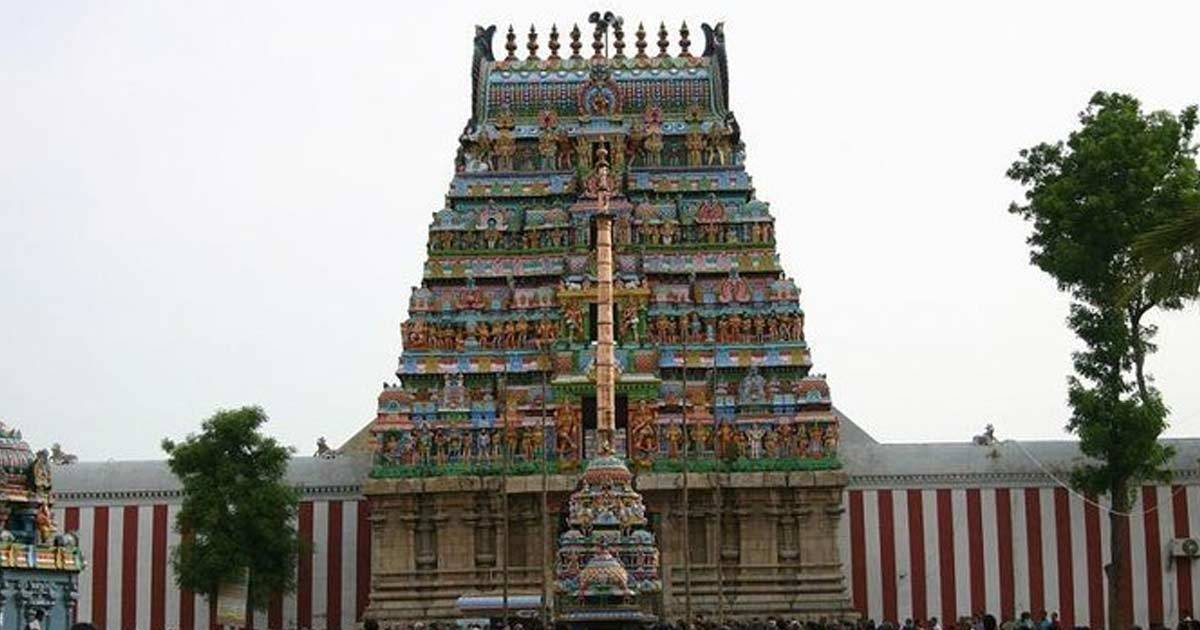
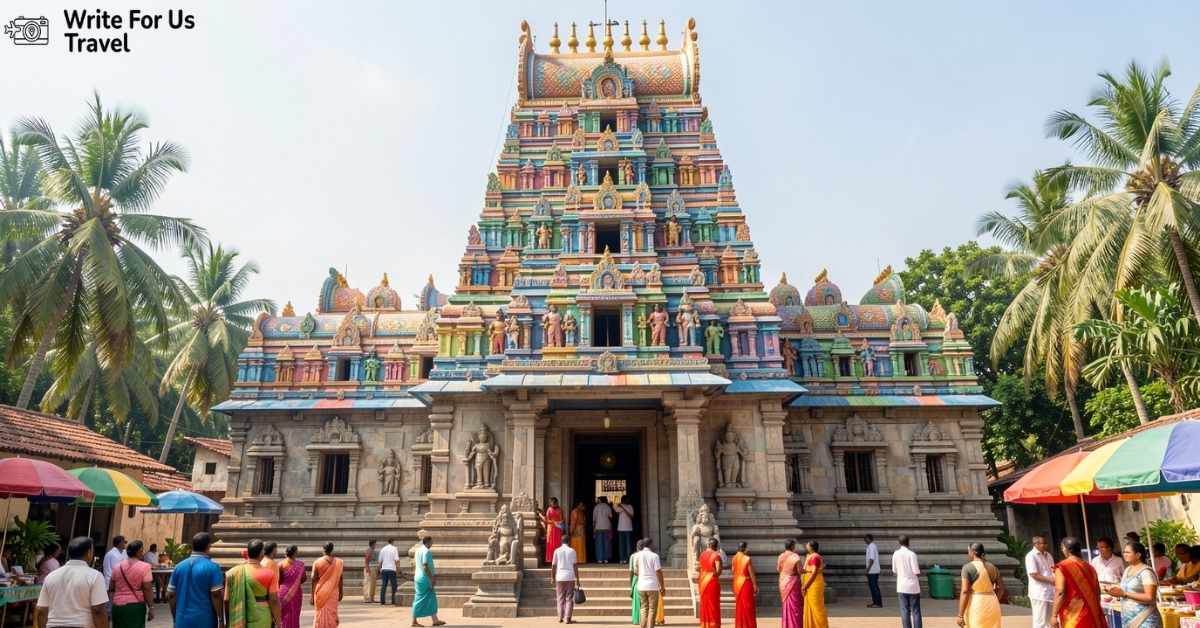
Step inside and you’ll immediately notice the Dravidian temple architecture Kanchipuram is famous for. The towering gopuram at the entrance greets you with layers of sculpted figures, mythological scenes carved in breathtaking detail. The main gopuram rises to a commanding height and is painted in vivid colors that seem to glow under the Tamil Nadu sun.
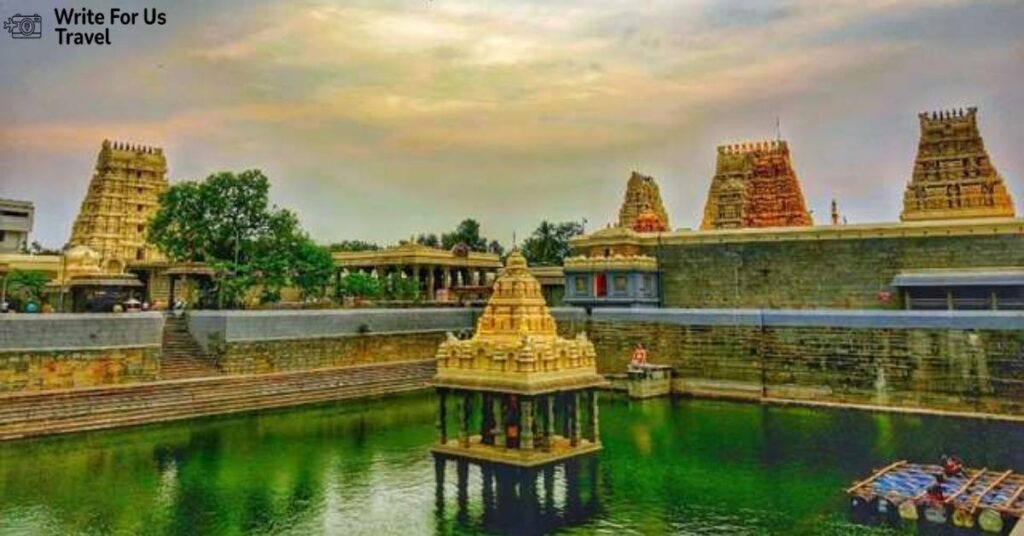
Inside the complex, the Gayatri Mandapam stands as a remarkable ceremonial hall used for religious discourses and special rituals. The Bangaru Kamakshi Pushkarini, the sacred temple tank, holds deep ritual significance. Devotees take a symbolic dip or simply touch the waters before entering the sanctum. The tank’s golden hue in the morning light has a calming, almost hypnotic quality.
The corridors are lined with intricate pillar carvings, each telling a story from the Puranas. You could spend hours just walking through and absorbing the artistry. It’s not a museum, though. Every stone here is alive with devotion.
Kanchi Kamakshi Spiritual Importance
Among all the Shakti Peethas in India, Kanchipuram holds a distinctly elevated status. Goddess Kamakshi is considered one of the three most powerful manifestations of the divine feminine, alongside the goddesses of Madurai and Varanasi. The Kamakshi temple spiritual significance is layered and profound.
This is one of the few temples where the goddess presides over all three functions: creation, preservation, and dissolution. Pilgrims come here not just seeking blessings but seeking inner transformation. The atmosphere during early morning poojas, when the priests chant Lalita Sahasranama and the fragrance of jasmine and camphor fills the air, touches something deep in the soul.
Kanchi Kamakshi Festivals and Celebrations
Kamakshi temple festivals are among the most vibrant in Tamil Nadu. Navratri here is something extraordinary. Nine nights of elaborate rituals, classical music performances, and processions through the temple streets draw thousands of devotees from across the country. The goddess is adorned in a different form each day, each representing a unique aspect of divine energy.
Panguni Utsavam, celebrated in the Tamil month of Panguni, is another major event. The chariot procession during this festival is a spectacle of faith and color. Devotees pull the decorated rath through the streets, singing hymns and offering flowers. If you can time your visit during these festivals, do it. You won’t forget it.
Pilgrimage Experience
Kanchipuram is often called the city of thousand temples, and visiting Kanchi Kamakshi is usually the centerpiece of any Kanchipuram pilgrimage temples tour. Many devotees also visit Ekambareswarar Temple, dedicated to Shiva, and the magnificent Varadaraja Perumal Temple, a landmark of Vaishnava tradition. The Kailasanathar Temple, one of the oldest in the city, is another must-visit for its exceptional Pallava-era architecture.
The Goddess Kamakshi temple darshan experience is deeply personal. Some visitors report feeling an unusual stillness the moment they enter the inner sanctum. Others come with long-held wishes and leave with tears of gratitude. Whatever you carry in your heart when you arrive, this temple seems to respond to it.
Best Time to Visit
The best time to visit Kamakshi temple is between October and March. The weather in Kanchipuram during these months is cooler and far more comfortable for temple visits and city exploration. Navratri in October is an especially magnetic time, as the town transforms into a festival of lights and devotion.
Avoid visiting in peak summer months, particularly May and June, when temperatures can climb uncomfortably high. Weekday mornings are ideal for those who prefer a quieter, more meditative darshan experience. Weekends and festival days attract large crowds, which can make the inner sanctum queue stretch for over an hour.
How to Reach
Kanchipuram is well connected. From Chennai, it’s roughly 75 kilometers and about a 90-minute drive. State government buses run regularly from Chennai’s Koyambedu Bus Stand to Kanchipuram. If you prefer a train, Kanchipuram has its own railway station with direct trains from Chennai Egmore. Private taxis and cabs are also widely available and convenient for families or groups.
Once in Kanchipuram, the temple is centrally located and easily accessible by auto-rickshaw or on foot from most parts of the town. No entry fees apply for general darshan, though special darshan and abhishekam participation involve nominal charges.
FAQ’s
What are the Kanchi Kamakshi Temple timings for daily darshan?
The temple opens at 5:30 AM and closes at 12:30 PM for morning darshan, and reopens from 4:00 PM to 9:00 PM in the evening.
Is there a dress code for visiting the Kamakshi temple?
Yes, traditional attire is expected. Men should wear dhoti or trousers with a shirt, and women are encouraged to wear sarees or salwar kameez.
Can non-Hindus visit the Kamakshi Amman temple?
Non-Hindus are generally not permitted entry into the inner sanctum, as is customary in most traditional Hindu temples in Tamil Nadu.
What is the best day to visit the Kamakshi temple for special poojas?
Fridays are considered especially auspicious for Goddess Kamakshi. The temple sees heightened devotion and elaborate rituals on this day.
How far is the Kamakshi temple from Chennai?
The temple is approximately 75 kilometers from Chennai and can be reached in about 90 minutes by road or train.

Oliver Bennett is Researcher focused on responsible, experience-led exploration. Having independently planned and completed 40+ trips across Europe and Asia, he provides practical itineraries, transport guidance, and safety insights grounded in firsthand knowledge. His work is supported by verified sources, local expert interviews, and regularly updated travel regulations.