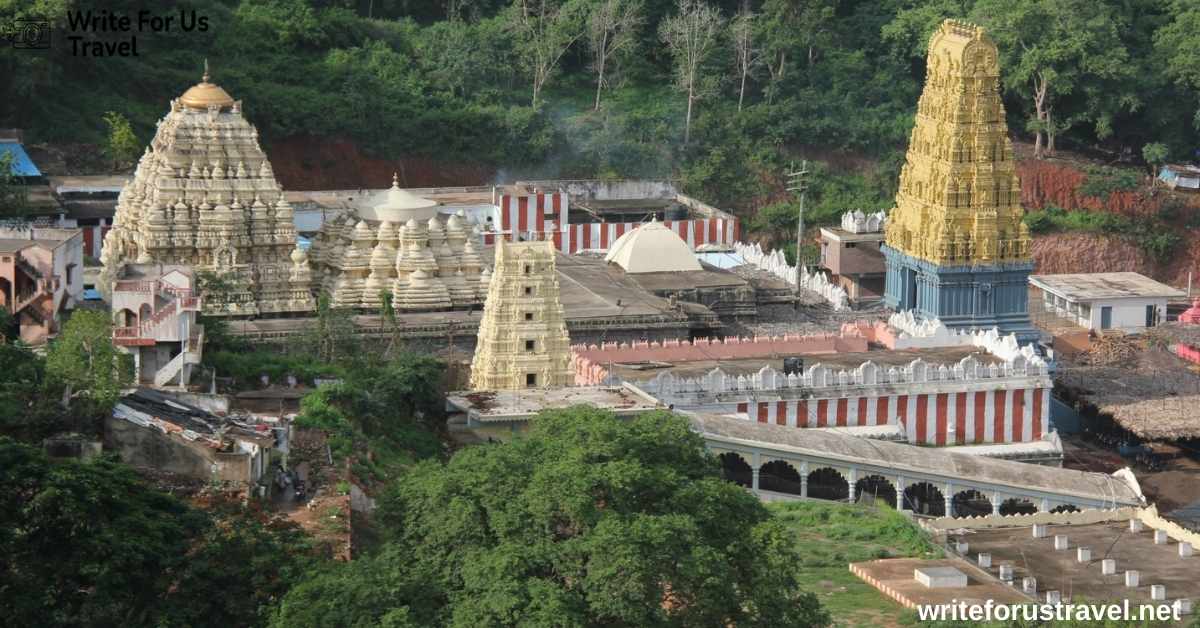
Have you ever stood at the foot of a hill and felt something pull you upward? Not just your legs, but something deeper. That’s exactly what pilgrims feel when they approach Simhachalam. Nestled in the Eastern Ghats near Visakhapatnam, this ancient temple carries centuries of devotion, mystery, and breathtaking beauty. Whether you’re a spiritual seeker, a history lover, or simply a curious traveler, Simhachalam has something that quietly stays with you long after you leave.
The Legend of Simhachalam Temple
Every great temple has a story. Simhachalam’s is extraordinary.
According to Hindu tradition, the demon king Hiranyakashipu grew so powerful that he believed himself to be God. He forbade the worship of Lord Vishnu throughout his kingdom. But his own son, Prahlada, refused to stop. Prahlada’s devotion was unshakeable, and no amount of torture could break it.
In one final, furious moment, Hiranyakashipu challenged his son. He pointed to a pillar and asked, “Is your God in there?” Prahlada said yes. The demon king struck the pillar with all his might, and from it emerged Lord Narasimha, the half-lion, half-man avatar of Vishnu. He destroyed the demon and protected his beloved devotee.
That divine moment is what Simhachalam commemorates. The presiding deity here is Sri Varaha Lakshmi Narasimha Swamy, a rare and unique combination of the Varaha (boar) and Narasimha (lion-man) avatars of Vishnu, with Goddess Lakshmi seated alongside. This makes the Simhachalam temple deity Varaha Lakshmi Narasimha one of the most distinctive divine forms in all of South India.
Local belief also holds that sage Vishwaksena and the great devotee Prahlada himself consecrated this shrine. Some legends even link the hill to the Ramayana era. The depth of this mythological tapestry is part of what makes visiting this Narasimha temple in Andhra Pradesh feel so different from other pilgrimage sites.
Read More: Nanganallur Anjaneya Temple: Chennai’s Sacred Giant You Must Visit
History of the Temple
The recorded history of Simhachalam Temple stretches back over a thousand years. Inscriptions found at the site date to the 11th century, though local tradition suggests the temple is far older.
The Eastern Ganga dynasty kings, who ruled much of Odisha and northern Andhra Pradesh, were among the earliest and most prominent patrons of this shrine. King Narasimhadeva I, the same ruler who commissioned the famous Sun Temple at Konark, contributed significantly to the expansion of Simhachalam. His royal patronage elevated the temple’s stature across the region.
Later, the Vijayanagara Empire continued this tradition of royal devotion. Records show that Krishnadevaraya, one of the most celebrated emperors in South Indian history, visited Simhachalam and made generous donations. Under Vijayanagara rule, the temple received significant structural additions and became a prominent stop along ancient pilgrimage circuits.
The temple also has documented connections with the Gajapati kings of Odisha and various local zamindars who treated it as their ancestral shrine. This layered patronage across centuries, spanning dynasties, empires, and regional rulers, reflects how deeply this site has been woven into the spiritual and political fabric of the eastern Deccan.
Today, Simhachalam stands as one of the most significant ancient temples in Andhra Pradesh, recognized both for its sacred importance and its historical legacy.
Architecture of Simhachalam Temple
The moment you step inside the temple complex, the architecture stops you in your tracks.
Simhachalam temple architecture is a remarkable fusion of Kalinga and Dravidian styles. This blend is rare and tells you a lot about the temple’s geographic and cultural position, sitting at the intersection of Odishan and Telugu-speaking regions. The Kalinga influence shows up in the towering shikhara, while Dravidian elements appear in the gopurams and the overall layout of the mandapas.
The main sanctum is built in the Kalinga nagara style, with a curvilinear tower that rises dramatically above the surrounding hills. The walls of the temple are richly carved with figures from Hindu mythology, celestial beings, animals, and intricate floral patterns. Every stone panel tells a story if you slow down long enough to look.
The temple has three main halls: the jagamohana (assembly hall), the mukhamandapa (front hall), and the natamandapa (dancing hall). These interconnected spaces create a sense of sacred progression as you move deeper into the complex.
One of the most striking features is the lion pillar, which stands in the outer courtyard. It’s said to represent the very pillar from which Lord Narasimha emerged. Seeing it in person gives you a quiet chill, the kind that reminds you why myths endure for millennia.
The entire complex sits atop a hill at around 800 feet above sea level, which means the setting itself is part of the architectural experience. The views over Visakhapatnam and the Bay of Bengal are stunning, and on a clear day, you feel like you’re standing between earth and sky.
Religious Significance
This isn’t just any Vishnu temple. Simhachalam holds a place among the most revered Narasimha Kshetras in India, often listed alongside Ahobilam and Yadagirigutta as a premier seat of Narasimha worship.
What makes the Varaha Narasimha idol significance so profound is the unique form of the deity. For most of the year, the idol is covered in sandalwood paste, a practice that dates back centuries. The true form of the deity, combining Varaha and Narasimha, is only revealed once a year on Akshaya Tritiya. Pilgrims travel from across India just for that one glimpse. If you’ve ever wanted to understand the concept of sacred unveiling in Hindu worship, Simhachalam is one of the most powerful places to experience it.
The temple is also deeply tied to Vaishnavite temple traditions. Strict ritual protocols are followed here, and the daily worship schedule reflects centuries of unbroken liturgical practice. The priests follow ancient Agamic texts, and the atmosphere inside the inner sanctum during aarti is something that words struggle to fully capture.
For devotees of Lord Narasimha across South India, this is a place of profound spiritual refuge. Many visit during times of personal crisis, believing that Narasimha’s protective power, the same grace that shielded Prahlada, remains alive and present here.
Festivals at Simhachalam Temple
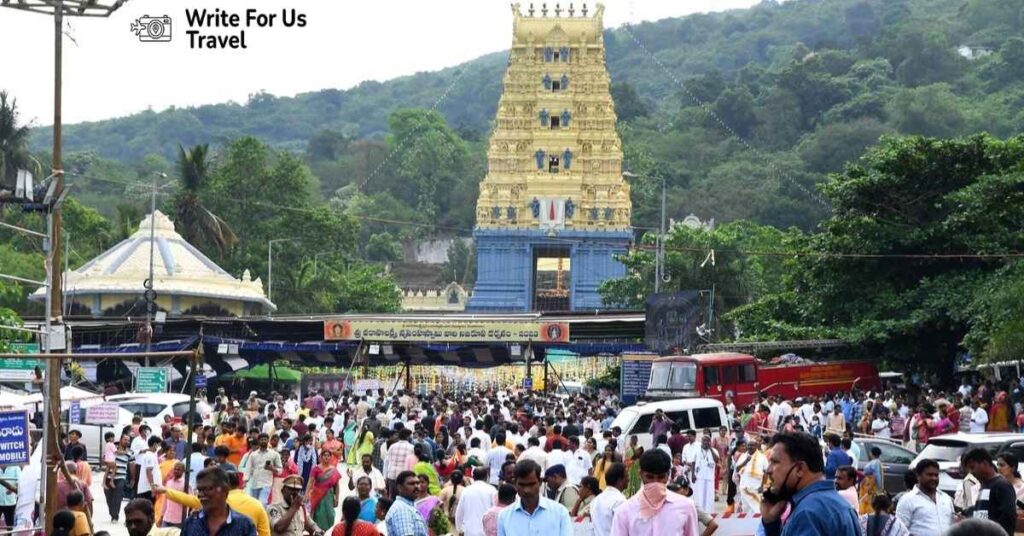
If you want to see Simhachalam at its most alive, plan your visit around one of its major festivals.
Chandanotsavam is the most iconic. Celebrated on Akshaya Tritiya, usually in April or May, this festival marks the day when the sandalwood paste covering the deity is ceremonially removed. The actual form of Sri Varaha Lakshmi Narasimha Swamy becomes visible to devotees for just a brief window of time. The Chandanotsavam festival at Simhachalam draws enormous crowds, sometimes numbering in the hundreds of thousands. The atmosphere is electric, deeply emotional, and unlike anything you’ll experience at most other temples.
Narasimha Jayanti, which falls in April or May on the 14th day of Vaishakha, is another major celebration. This marks the divine appearance of Lord Narasimha. Devotees observe fasts, special prayers are conducted through the night, and the temple resonates with the chanting of Narasimha stotras.
Brahmotsavam, the annual nine-day festival, is celebrated with great grandeur. Deities are taken out in procession on ornate vahanas (vehicles), temple elephants participate in the festivities, and the entire hillside becomes a sea of devotion and color.
Vaikunta Ekadasi, celebrated in December or January, is another significant event when pilgrims queue up before dawn for the sacred Vaikunta Dwara darshan.
If you’re planning a trip to this spiritual landmark in Visakhapatnam, aligning it with any of these festivals will make the experience truly unforgettable.
Temple Timings
Planning your visit well saves you a lot of time and stress. Here’s a clear breakdown of the Simhachalam timings so you know exactly when to show up.
The temple opens early in the morning and remains open through the day with a midday break.
Morning session: 6:00 AM to 1:00 PM
Evening session: 3:00 PM to 8:30 PM
Simhachalam temple darshan timings can vary slightly on festival days and major occasions, so it’s always a good idea to verify before you travel. On Akshaya Tritiya and Narasimha Jayanti, the temple may open earlier and stay open well into the night to accommodate the surge in pilgrims.
Special sevas and archanas are available throughout the day. If you want a calmer darshan experience, early morning, just after the temple opens, is your best bet. The crowd is thinner, the hill air is cool and fresh, and the atmosphere feels especially serene.
Dress code is important here. Traditional attire is expected inside the sanctum. Men are generally required to wear a dhoti, and women should dress modestly in a saree or salwar. It’s a sign of respect, and the temple authorities do enforce this.
How to Reach Simhachalam
Getting to Simhachalam is straightforward. The temple is located about 25 kilometers from the heart of Visakhapatnam, making it very accessible.
By road, you can hire a cab or take a local bus from Visakhapatnam city. The approach road winds up the hill and offers lovely views. Auto-rickshaws are available from Simhachalam town at the base of the hill if you prefer a shorter ride.
By rail, the nearest major station is Visakhapatnam (Vizag) Junction, which is well-connected to cities across India including Hyderabad, Chennai, Kolkata, and Delhi. From the station, it’s a comfortable 45-minute drive to the temple.
By air, Visakhapatnam International Airport is the closest airport, with flights from major Indian cities. From the airport, the temple is roughly 35 to 40 minutes by cab.
Once you reach the base of the hill, you have two options. You can climb the steps, which is the traditional route favored by pilgrims who want the full experience. Or you can take the motorable road that goes directly to the temple complex. There is also a ropeway that operates on certain days, offering a fun and scenic way to ascend.
For pilgrimage places near Visakhapatnam, Simhachalam is one of the easiest to access, and that convenience makes it popular with both local devotees and out-of-town visitors.
Nearby Attractions
Once you’re in the area, don’t head back too quickly. The region around Simhachalam has plenty to offer.
Kailasagiri is a lovely hilltop park in Visakhapatnam with panoramic views and a massive Shiva-Parvati statue. It’s a peaceful spot that’s perfect for an evening visit.
Rushikonda Beach is one of the cleanest and most scenic beaches in Andhra Pradesh. It’s about 20 kilometers from Simhachalam and well worth the detour if you enjoy the coast.
INS Kursura Submarine Museum gives you a fascinating look at a decommissioned Indian Navy submarine. It’s a unique and educational experience, especially for families.
Borra Caves, located about 90 kilometers from Visakhapatnam, are a geological marvel with stunning stalactite and stalagmite formations. They make for an excellent day trip from the city.
Araku Valley, a scenic hill station about 115 kilometers away, is famous for its coffee plantations, tribal culture, and cool climate. If you have a few extra days, it’s a wonderful extension to your Visakhapatnam itinerary.
These temples to visit in Visakhapatnam and the surrounding attractions can easily be combined into a two or three day travel plan.
FAQ’s
What are the opening hours of Simhachalam Temple?
The temple is open from 6:00 AM to 1:00 PM and again from 3:00 PM to 8:30 PM. Timings may extend during major festivals.
What is the significance of Chandanotsavam at Simhachalam?
Chandanotsavam, held on Akshaya Tritiya, is the day when the sandalwood paste covering the deity is removed, revealing the original form of Sri Varaha Lakshmi Narasimha Swamy to devotees.
How far is Simhachalam Temple from Visakhapatnam city?
The temple is approximately 25 kilometers from central Visakhapatnam and takes about 45 minutes to reach by road.
What is the dress code for visiting Simhachalam Temple?
Traditional attire is required. Men should wear a dhoti inside the sanctum, and women are expected to dress in a saree or similar modest clothing.
What is the best time to visit Simhachalam Temple?
Early morning darshan on regular days is ideal for a peaceful visit. For a spiritually immersive experience, plan your trip during Chandanotsavam or Narasimha Jayanti.

Oliver Bennett is Researcher focused on responsible, experience-led exploration. Having independently planned and completed 40+ trips across Europe and Asia, he provides practical itineraries, transport guidance, and safety insights grounded in firsthand knowledge. His work is supported by verified sources, local expert interviews, and regularly updated travel regulations.