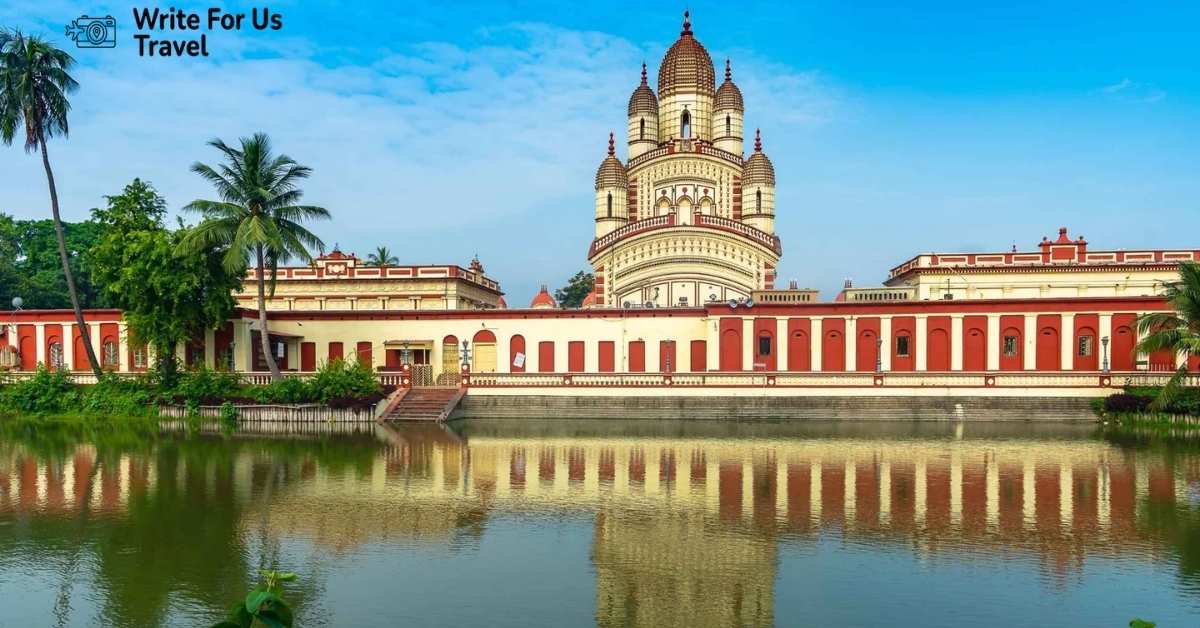
If you’ve ever felt drawn to a place before even setting foot in it, Dakshineswar Kali Temple is exactly that kind of destination. Nestled on the eastern bank of the Hooghly River, this iconic temple doesn’t just attract pilgrims, it pulls in anyone who’s curious about India’s spiritual roots, architectural brilliance, and living history. Whether you’re planning a visit or simply want to understand why millions consider this temple sacred, you’re in the right place.
Who is Goddess Bhavatarini?
Before you step inside those towering gates, it helps to understand who you’re actually visiting. The presiding deity here is Goddess Bhavatarini, a form of Goddess Kali. Her name carries a deep meaning, “she who carries devotees across the ocean of worldly existence.” In simpler words, she’s believed to liberate souls from the cycle of birth and death.
Unlike some fierce depictions of Kali, Bhavatarini is worshipped here with extraordinary tenderness and devotion. She stands on Lord Shiva’s chest, adorned with a garland of skulls and holding a severed head, but to her devotees, she isn’t frightening. She’s a mother. A protector. The significance of Bhavatarini Kali goes far beyond the iconography. She represents the raw, unfiltered power of nature combined with maternal grace. Pilgrims from across India travel to seek her blessings, especially during times of personal crisis, new beginnings, or spiritual seeking.
Historical Significance
The history of Dakshineswar Kali Temple is rooted in a dream, quite literally. Rani Rashmoni, a wealthy and deeply devout widow from a lower-caste family, dreamed that Goddess Kali instructed her to install the deity’s image on the banks of the Hooghly River and build a temple in her honor. Rani didn’t hesitate. She purchased a large plot of land in Dakshineswar and broke ground in 1847. The temple was consecrated on May 31, 1855.
What makes this Rani Rashmoni temple history even more remarkable is the social context. Rani Rashmoni belonged to the Mahishya caste, considered a lower social group at the time. Many Brahmin priests initially refused to serve in a temple built by someone of her background. That’s when a young man named Gadadhar Chattopadhyay stepped in, a name you might know better as Sri Ramakrishna Paramahamsa.
Sri Ramakrishna became the head priest of this temple and spent the most transformative decades of his life here. He didn’t just perform rituals. He meditated for hours, experienced visions of the Goddess, and developed a universal philosophy that would eventually influence thinkers like Swami Vivekananda. The Sri Ramakrishna temple connection is inseparable from Dakshineswar’s identity. His room, preserved exactly as it was during his lifetime, still stands on the temple premises. Visiting it feels strangely intimate, like stepping into someone’s personal sanctuary.
Temple Architecture
Standing in the courtyard, the first thing that strikes you is the sheer visual drama of the place. The Dakshineswar temple architecture follows the Navaratna style, a Bengali architectural tradition featuring nine spires or turrets arranged in a pyramid-like formation. This design is named “navaratna” for its nine towers, each rising to a different height and crowned with ornate detailing.
The main temple rises to about 100 feet and is built on a raised platform. The inner sanctum houses the silver image of Goddess Bhavatarini standing on a silver-made image of Shiva. Surrounding the main temple are 12 smaller Shiva temples arranged in a neat row along the riverside, and a Radha Krishna shrine that adds another spiritual dimension to the complex. That Radha Krishna shrine in Kolkata is a peaceful spot, often less crowded than the main sanctum, making it perfect for quiet reflection.
Read More: Srisailam Mallikarjuna Temple – Timings, History
Key Architectural Highlights:
- The main temple follows the Navaratna (nine-spired) Bengali architectural style
- 12 Shiva temples line the northern and southern sides of the courtyard
- A Radha Krishna temple faces the main shrine from the west
- The Panchavati garden, a cluster of five sacred trees, marks where Ramakrishna performed intense meditation
- The entire complex sits on an elevated platform overlooking the Hooghly River
- The natmandir (concert hall) in front of the main temple is used for devotional singing and religious gatherings
The Panchavati garden meditation site deserves a special mention. It’s a grove of five trees, a banyan, bel, amalaki, ashoka, and bar, considered sacred in Hindu tradition. Ramakrishna spent countless nights meditating here. Even today, the spot carries a contemplative stillness that visitors often describe as unusual and deeply calming.
Temple Timings
Planning your visit around the Dakshineswar temple opening and closing time will save you a lot of unnecessary waiting. The temple operates in two daily sessions to accommodate both morning devotees and evening visitors.
Morning session: 6:00 AM to 12:30 PM
Evening session: 3:00 PM to 8:30 PM
The temple remains closed during the afternoon hours for deity rest and routine rituals. Darshan (the act of beholding the deity) is available during both sessions, but the morning aarti around 6:00 AM is particularly special. The chanting, the incense, the sound of bells, it creates an atmosphere that’s hard to replicate at any other time of day.
The best time to visit Dakshineswar temple is early morning on a weekday. Weekends and festival days draw enormous crowds, and the queues for darshan can stretch for hours. If you want a calm, contemplative experience, arrive before 7:00 AM on a Tuesday or Wednesday. If you want to experience the energy of thousands of devotees together, plan your visit around Kali Puja or Amavasya.
Major Festivals Celebrated
The temple calendar is packed with celebrations, but a few stand out as truly unmissable.
Kali Puja:
Kali Puja at Dakshineswar is one of the most electrifying religious events in Kolkata. It falls on the new moon night of the Hindu month of Kartik, usually in October or November. The entire temple complex is illuminated with lights, and thousands of devotees pour in through the night. Special rituals, midnight aarti, and offerings take place in an atmosphere of intense devotion. The Kali Puja celebrations at this Kolkata temple are distinct from commercial Puja events elsewhere, here, it’s deeply personal and spiritually charged.
Amavasya:
Every Amavasya (new moon day) at Dakshineswar draws a significant gathering. Devotees believe that worshipping Goddess Kali on this day brings special blessings, removes obstacles, and helps souls of departed ancestors find peace. You’ll notice that the temple is noticeably busier on every Amavasya compared to regular days, so plan accordingly if you’d prefer a quieter visit.
Other Celebrations:
Snana Yatra (the bathing festival of the deities), Ratha Yatra, Durga Puja, Dol Yatra (Holi), and the anniversary of the temple’s consecration are all observed with varying degrees of ceremony and community participation. Each festival draws a different crowd and adds a unique layer to the temple’s living tradition.
How to Reach Dakshineswar Kali Temple
Getting there is easier than most people assume. The temple sits in Dakshineswar, in the northern part of Kolkata, and is well-connected by multiple modes of transport.
By Train:
The nearest railway station is Dakshineswar Station, which is connected to Kolkata’s suburban rail network. Trains from Sealdah Station run frequently and stop at Dakshineswar, making this one of the most affordable and direct options.
By Metro:
This is probably the easiest option for most visitors. The Dakshineswar temple nearest metro station is Dakshineswar Metro Station, the northern terminus of the Blue Line (Line 1) of the Kolkata Metro. From Dum Dum or central Kolkata, you can hop on a metro and reach the temple in under 30 minutes, depending on where you’re starting.
By Road:
Plenty of buses, taxis, and app-based cab services connect Dakshineswar to all major parts of Kolkata. If you’re driving, the temple has parking facilities nearby. The route via Belgharia Expressway is generally faster during peak hours.
By Ferry:
This is where the journey becomes part of the experience. You can take a ferry from Belur Math (the headquarters of the Ramakrishna Mission, founded by Swami Vivekananda) across the Hooghly River to Dakshineswar. The Belur Math ferry route is short, just a few minutes, but crossing the river with a view of the temple ahead is genuinely memorable. Many visitors combine both sites in a single day trip.
Nearby Restaurants
After a morning of darshan and exploring the temple complex, hunger usually hits quickly. The area around Dakshineswar has several dining options that cater to pilgrims and tourists alike. Most of the eateries near the temple serve vegetarian food, keeping in line with the religious nature of the location.
Look out for small local dhabas and sweet shops just outside the temple gates. Kolkata-style luchi with aloo sabzi, mishti doi (sweet yogurt), and freshly fried jalebis are staple offerings. For something more substantial, places like Anand Restaurant and various Bengali thali counters in the nearby market area serve decent meals at reasonable prices. Since many visitors come here on pilgrimage, you won’t struggle to find sattvic (pure vegetarian) food options close by.
Nearby Hotels
If you’re visiting from outside Kolkata or planning a multi-day spiritual trip, staying close to the temple makes practical sense. The Dakshineswar area has a range of accommodation options, from budget guesthouses to more comfortable hotels.
For budget travelers, lodges in the Shyambazar and Dunlop areas offer affordable stays with easy metro access to the temple. If you prefer more comfort, hotels in central Kolkata, such as those around Salt Lake or Park Street, are well-connected and give you the added bonus of exploring other parts of the city. Some dharamshalas (pilgrim rest houses) near the temple premises also offer basic accommodation specifically for devotees who wish to stay close to the shrine.
FAQ’s
Who built Dakshineswar Kali Temple?
Rani Rashmoni, a philanthropist and devout widow from Kolkata, built the temple. Construction began in 1847 and it was consecrated in 1855.
What is the significance of Goddess Bhavatarini?
Bhavatarini means “she who liberates devotees from worldly existence.” She is a form of Goddess Kali worshipped with immense devotion at this temple.
What are the Dakshineswar Kali Temple timings today?
The temple opens from 6:00 AM to 12:30 PM and again from 3:00 PM to 8:30 PM daily.
What is the connection between Sri Ramakrishna and this temple?
Sri Ramakrishna Paramahamsa served as the head priest here for several decades. His spiritual experiences at this temple shaped his universal teachings and influenced global spirituality.
Is there a ferry service available to reach the temple?
Yes, a ferry connects Belur Math to Dakshineswar across the Hooghly River. It’s a short but scenic ride and a popular option for visitors exploring both sites in a single trip.

Oliver Bennett is Researcher focused on responsible, experience-led exploration. Having independently planned and completed 40+ trips across Europe and Asia, he provides practical itineraries, transport guidance, and safety insights grounded in firsthand knowledge. His work is supported by verified sources, local expert interviews, and regularly updated travel regulations.